Overhead Crane Safety: Training Essentials and Common Violations
Overhead cranes can move heavy materials efficiently, but their power also means operators need a clear understanding of the equipment, the load, and the work area around them. Safe operation depends on more than knowing which controls move the crane in each direction.
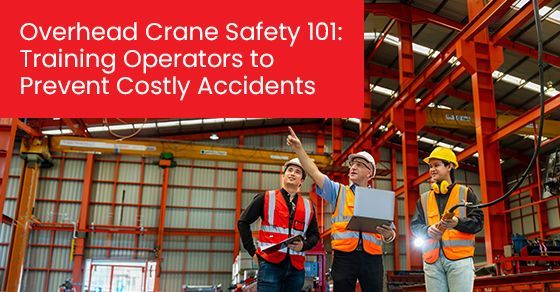
Effective overhead crane training should prepare workers to recognize hazards, understand equipment limits, follow workplace procedures, and make safe decisions before a load leaves the ground. For employers, that knowledge is also part of maintaining a practical crane
safety program that reflects the rules and conditions of the workplace.
How Overhead Crane Training Supports Safer Operations
A crane operator has to consider equipment condition, load weight, travel path, nearby workers, and changing conditions during the lift. Training gives workers a foundation for making those decisions rather than learning only through experience on the job.
Requirements also differ by jurisdiction and workplace type. Ontario employers need to consider the Occupational Health and Safety Act and applicable regulations administered by the Ministry of Labour, Immigration, Training and Skills Development (MLITSD). Employers elsewhere in Canada, or in federally regulated workplaces, should confirm the legislation and standards that apply to their operations.
Recognizing Crane and Workplace Hazards Before a Lift
Hazard recognition should begin before the load moves. Operators need to consider the condition of the crane, the load itself, possible obstructions, the intended travel path, and whether other workers could enter the area.
Ontario’s Regulation 851 for Industrial Establishments requires a lifting device to be operated so that no part of the load passes over a worker. Crane operator training should reinforce the importance of identifying these exposures before lifting rather than attempting to correct an unsafe path once a suspended load is already moving.
Understanding Rated Capacity and Load Limits
Operators also need reliable information about what the crane can safely lift. Guessing at a load’s weight or assuming that a familiar crane can handle an unfamiliar load creates unnecessary risk.
Under Ontario Regulation 851, lifting devices must be plainly marked with enough information for the operator to determine the maximum rated load under the relevant operating conditions. Training should teach operators to stop and verify load information whenever weight, configuration, or lifting conditions are uncertain.
Conducting Required Equipment Checks and Inspections
Operators should know what to look for before using a crane and when a concern needs to be reported. Visible damage, unusual operation, problems with controls, or concerns involving lifting components shouldn’t simply be ignored because the equipment still moves.
Routine operator checks are not the same as formal examinations. In Ontario industrial workplaces, a lifting device must be thoroughly examined by a competent person before first use and thereafter as necessary, at least as frequently as the manufacturer recommends and in any case at least once a year. A signed permanent record is also required.
Maintaining Control of the Load and Travel Path
A suspended load requires attention throughout the lift. Operators need to monitor its movement, nearby workers, the destination, and any conditions that could cause swinging or uncontrolled rotation.
Ontario’s Industrial Establishments regulation addresses uncontrolled load movement and requires guide ropes where a worker could be endangered by rotation or other uncontrolled motion. Proper overhead crane training should reinforce smooth operation and the need to follow any workplace-specific procedures used to maintain control.
Establishing Operator Competency and Training Records
Knowing the controls is only one part of competency. Workers also need instruction that reflects the hazards, procedures, and responsibilities of their actual job.
WSIB guidance advises employers to provide job-specific training, make workers aware of workplace hazards and safe work practices, and maintain records showing what training was provided and who participated.
Ontario construction rules may add further requirements. Under O. Reg. 213/91, workers operating certain cranes or hoisting devices must be trained in safe operation, and written proof of training must be carried while operating the equipment.
Applying Relevant CSA Crane Safety Standards
Canadian standards can provide another important reference point for crane safety programs. The current CSA B167:26 standard, published in 2026, covers overhead cranes, gantry cranes, monorails, hoists, and jib cranes, including requirements related to design, inspection, testing, maintenance, and safe operation.
That doesn't mean CSA B167 automatically has the force of law in every jurisdiction. Employers should determine how legislation, adopted standards, manufacturer instructions, contracts, and their own workplace procedures apply to their specific operation.
Common Overhead Crane Safety Violations and Risky Practices
Some crane safety problems involve clear regulatory requirements. Others may be unsafe practices that become serious hazards even when they aren't described as a specific statutory offence.
| Risky Practice or Violation | What Proper Training Should Reinforce |
|---|---|
| Allowing an untrained or insufficiently competent worker to operate equipment | Confirm operator competency and applicable training requirements before assigning crane duties |
| Ignoring rated capacity information | Verify the crane's capacity and load information before lifting |
| Allowing loads to pass over workers where prohibited | Plan the travel path and keep workers clear of suspended loads |
| Failing to address required examinations or identified equipment concerns | Understand inspection responsibilities and report problems before use |
| Proceeding with an unclear or uncontrolled load path | Stop, reassess the lift, and use appropriate controls before movement continues |
| Ignoring workplace procedures | Apply site-specific rules in addition to general crane operating principles |
For Ontario workplaces, whether a particular action constitutes a regulatory violation depends on the applicable regulation and circumstances. Crane safety programs should therefore be built around the actual legal requirements governing the workplace, not a generic checklist borrowed from another jurisdiction.
Build Stronger Crane Safety With Overhead Crane Training
Effective overhead crane training can help workers recognize hazards, understand load limits, follow safe operating procedures, and make better decisions during lifting tasks. SafestWork provides Overhead Crane Training for employers and workers looking to strengthen practical crane safety knowledge and operator preparedness.
Employers should also verify the legislation, MLITSD requirements, WSIB obligations, applicable CSA standards, manufacturer instructions, and workplace procedures that apply to their equipment and jurisdiction.
Reach out to SafestWork today at 1-844-SAFEST-1 (844-723-3781), email us at support@safestwork.com or click here to get in touch online.
Frequently Asked Questions
What Should Overhead Crane Training Cover?
Training should address safe operation, hazard recognition, equipment limits, load control, workplace procedures, and the responsibilities connected to the operator’s actual tasks. Exact requirements can vary depending on the equipment, jurisdiction, work environment, and standards that apply.
Who Is Allowed to Operate an Overhead Crane in Ontario?
The answer depends on the workplace and applicable regulation. In industrial establishments, Regulation 851 requires lifting devices to be operated by a competent person or by a worker being instructed while accompanied by a competent person.
Construction projects may be subject to additional provisions under O. Reg. 213/91, including safe-operation training and written proof-of-training requirements for certain cranes and hoisting devices. Employers should confirm exactly which requirements apply to their equipment and workplace.
How Does CSA B167 Relate to Overhead Crane Safety?
CSA B167:26 is a Canadian standard covering overhead cranes, gantry cranes, monorails, hoists, and jib cranes. Its scope includes design, inspection, testing, maintenance, and safe operation.
Employers still need to determine whether and how the standard applies through legislation, contracts, workplace policies, or other requirements in their jurisdiction.
What Are Common Signs That Crane Operator Training Needs Review?
Training may need another look when operators are uncertain about load limits, hazard controls, workplace procedures, equipment checks, or their responsibilities. Changes to equipment, work processes, assigned duties, or identified safety gaps are also practical reasons to reassess training needs.
WSIB guidance supports job-specific training that reflects actual workplace hazards and safe work practices, along with appropriate training records.