How to Develop a Comprehensive Safety Training Program for Your Industrial Workforce
Workplace safety isn’t just a box to check; it’s a critical part of running any industrial operation. From manufacturing and energy to construction and warehousing, industrial environments carry serious risk. A well-designed safety training program protects your team, supports compliance with Canadian regulations, and helps reduce workplace incidents.
Here’s how to create a safety training program that meets the needs of your industrial workforce while aligning with MLITSD and CSA standards.
Assess Workplace Hazards and Training Needs
Every industrial site is different. Before you can design an effective training program, you need to understand the specific hazards your employees face. This starts with a thorough hazard assessment across job roles and work areas.
Look for common risks like:
- Moving equipment or heavy machinery
- Chemical handling or airborne exposures
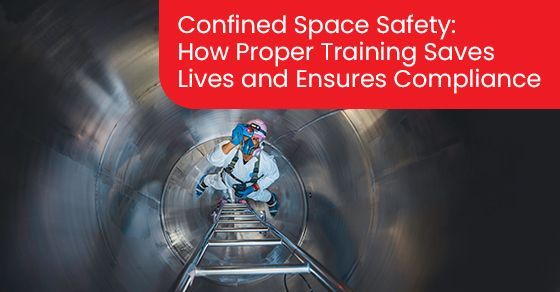
- Working at heights or in confined spaces
- Manual material handling or repetitive strain
Under Ontario’s Ministry of Labour, Immigration, Training and Skills Development (MLITSD), employers are expected to identify and assess hazards as part of their legal obligations.
Use incident reports, workplace inspections, and worker feedback to identify gaps in awareness, behaviour, or task execution. This input forms the foundation of your safety training strategy.
Hazard identification should be continuous, not a one-time activity. The conditions of industrial sites can shift with seasonal changes, production demands, or staffing changes. New equipment or changes in process should automatically trigger a new review of potential safety risks. Involving frontline workers in this process also improves accuracy, as they are often the first to notice emerging issues. Documentation of identified hazards and associated training needs ensures nothing gets missed and provides a record of due diligence.
Define Clear Safety Training Goals and Responsibilities
Effective safety training programs begin with a clear purpose. Identify what you want to achieve with your training: reduced injuries, fewer near misses, increased compliance, or faster onboarding.
Set measurable goals like:
- Decrease manual handling injuries by 20%
- 100% training completion for forklift operators within 30 days
- Zero unreported incidents per quarter
Under Canadian occupational health and safety legislation, employers, supervisors, and workers each have defined responsibilities. These roles should be outlined clearly in your training program.
Document who delivers training, who monitors completion, and how refresher sessions are triggered. Clear accountability supports WSIB prevention strategies and makes return-to-work processes more efficient.
Design a Structured Safety Training Program
A comprehensive industrial safety training program should include multiple layers of instruction:
- Orientation and onboarding: Introduce company policies, worker rights, and basic hazard awareness.
- Job-specific and task-based instruction: Tailor training to high-risk tasks such as equipment operation, confined space entry, or lockout/tagout procedures.
- Equipment and machinery training: Provide detailed instruction on safe use, maintenance protocols, and pre-use inspections.
- Emergency response and incident reporting: Teach workers what to do in case of fire, spills, injuries, or other emergencies.
Mixing classroom sessions, hands-on training, and digital learning modules helps improve comprehension and engagement. Where relevant, align your training content with applicable CSA standards.
Ensure Compliance With Canadian Regulations and Standards
Your training program must meet Canadian standards to be legally compliant and effective. That includes:
- MLITSD (formerly MOL) requirements for Ontario workplaces
- WSIB prevention strategies and injury reporting protocols
- CSA Group standards for safety equipment, training procedures, and competency validation
Avoid referencing OSHA or American standards. Your program should reflect the unique legal and regulatory framework that applies to industrial employers in Canada.
Compliance considerations to include:
- Documented hazard assessments
- Proof of training completion
- Worker sign-offs and comprehension testing
- Regular updates after regulatory changes
- Refresher intervals per CSA or MLITSD guidelines
Implement Training and Engage the Industrial Workforce
Rollout matters just as much as the content. Plan your training sessions in a way that minimizes disruption to daily operations. Stagger sessions, use short-format toolbox talks, or integrate coaching into shift schedules.
Involve supervisors and lead hands directly. When leaders are engaged in safety training, it signals that safety is a core operational value.
Track attendance, verify comprehension with quizzes or hands-on testing, and document everything. Engagement matters; make space for questions, encourage worker input, and provide examples that relate to the specific worksite.
Evaluate, Refresh, and Improve the Training Program
A good safety training program never stands still. Build a process for evaluating its effectiveness using:
- Incident and near-miss reports
- Safety audits and job observations
- Worker feedback surveys or toolbox talk participation
Update training after any serious incident or operational change. Use annual reviews to revise outdated material and improve engagement methods.
Schedule refresher training based on CSA or MLITSD recommendations. Reinforce that safety is a living priority, not a one-time presentation.
Common Mistakes in Industrial Safety Training Programs
Watch out for these frequent issues:
- Relying on outdated or generic training materials
- Skipping hands-on instruction for critical tasks
- Failing to track training completion or understanding
- Not documenting training activities for compliance purposes
- Treating training as a checkbox instead of a performance tool
These missteps reduce the effectiveness of your program and increase risk.
Why a Strong Safety Training Program Protects Your Industrial Workforce
A strong safety training program protects your team, keeps your operation compliant with Canadian regulations, and supports a culture of accountability. For industrial employers, it’s one of the smartest investments you can make.
To learn more about building effective, compliant safety training solutions for your organization, explore training programs from SafestWork.
Reach out to
SafestWork today at 1-844-SAFEST-1 (844-723-3781), email us at
support@safestwork.com or
click here to get in touch online.